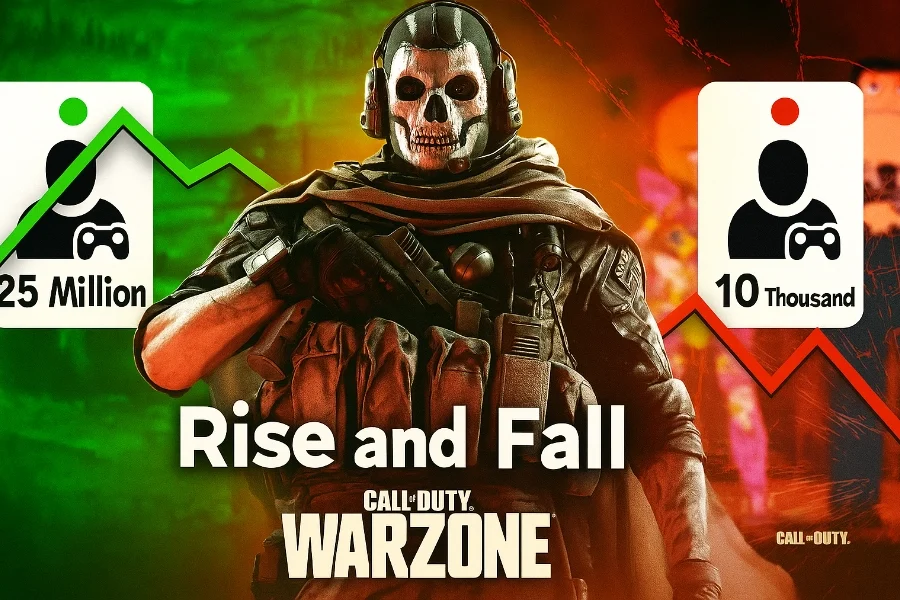
This article explores the full timeline: from the thrilling early days and the success of Verdansk, through the troubled Caldera era, to the disappointment of Warzone 2 and the recent struggles of Black Ops 6. This is the complete story of how Call of Duty: Warzone rose to fame and fell into uncertainty.

Table of contents
From Modern Warfare’s Hype to Battle Royale Glory
The excitement for Modern Warfare 2019 was huge. Fans were eager for a contemporary setting instead of futuristic or WWII battlefields, especially with iconic characters like Captain Price and Gaz making their return. The game launched with cutting-edge graphics, realistic mechanics, and a fresh movement system that appealed to both veterans and new players.
Follow Item4Gamer on social media and stay one step ahead of the game! 🚀






When the Warzone battle royale mode arrived, it wowed the gaming community with innovations:
- The Gulag — giving players a second chance after death.
- Contracts — high-risk, high-reward missions for extra cash and loot.
- Custom loadouts, precise sound design, and balanced movement.
Seasonal events like Halloween and thematic map transformations kept the game fresh, while the COVID-19 lockdowns fueled a surge in players, pushing the game to the peak of online popularity.
December 8, 2021 — The Beginning of the Decline

With Caldera, the glow of Verdansk faded. The new WWII-themed map lacked its predecessor’s detail and personality. It was massive but full of forests and empty fields, with fewer buildings for cover. Bugs plagued gameplay, while Plunder mode forced the use of outdated WWII weapons. Airplanes, overpowered bombers, and unrealistic skins clashed with the gritty modern-war aesthetic.
Despite developer efforts, player dissatisfaction grew. This marked the point where Warzone began losing its once-loyal fanbase.
Warzone 2 — A Short-Lived Record Breaker
On November 16, 2022, Warzone 2 launched and shattered records — 25 million concurrent players in days. However, its extreme realism (heavy recoil, thick gun smoke) and slower movement frustrated fans. Popular modes like Rebirth Island and Plunder were missing, and the beloved “slide cancel” mechanic was gone.
Even the introduction of new maps and the DMZ mode couldn’t revive the hype. Forgotten updates and removed features left players longing for Warzone’s earlier days.
Modern Warfare 2023 — Promises and Problems
A year later, Modern Warfare 2023 arrived faster-paced, with reduced recoil and the return of old movement mechanics. Yet it launched without a proper story, had very few multiplayer changes, and re-skinned DMZ as Zombies. The price matched a full game, but fans called it an incomplete product.
Black Ops 6 — The Last Hope That Faded
Excitement surged for Black Ops 6. Graphics, movement, and visuals improved, with Verdansk’s return promised for Season 2. But at launch, the game overwhelmed new players with extra complexity and suffered from anti-cheat issues and random bans.
Season 3 finally brought Verdansk back almost exactly as before — same lighting, structures, and layout — but trust was gone. Years of inconsistent decisions had drained the community’s patience.
Conclusion
From groundbreaking gameplay to broken promises, Call of Duty: Warzone’s journey reflects how fast momentum can be lost in the gaming industry. Even though updates will continue until year-end, the community suspects this might be the final Warzone. What remains is not the game itself, but the memories of those glory days when players roamed Verdansk at its peak.